Challenge(s)
How can a diverse group of local stakeholders be effectively re-engaged to jointly improve the ecological status, water experience, communication and water security?
Good practice
From participation to shared responsibility
Co-creation, early involvement and transparent communication form a solid foundation for ecological restoration, improved water experience and long-term river stewardship. Through an inclusive and creative engagement approach, experimentation can rebuild a strong relationship with all local stakeholders of a river system. By combining innovation workshops with an educational participation action (“Message in a Bottle”), this initiative created shared understanding, identified collective needs and strengthened collaboration.
This good practice also includes objective 4.4 (Developing collaborative approaches and drawing on scientific and technologic knowledge from the scientific community and civil society to support decision-making) of the AIVP's Agenda 2030.
Case study
The Connected River project is an EU-funded project that aims to boost the capacities of multi-stakeholder ecosystems to deliver services that guarantee the safety, accessibility, and livability of waterways & waterfronts in the North Sea Region. One of the experiments aims to restore the ecological status of the Kleine Nete River while simultaneously improving water experience, communication and water security. Given the high number and diversity of stakeholders active in the pilot area: kayak users, sports federations, kayak rentals, the Flanders Environment Agency (VMM), several municipalities, Natuurpunt, Tourism Province Antwerp, the Department of Nature and Forests, among others. The first challenge was to rebuild trust and create a shared understanding of the ambitions for the river. To achieve this, the project developed a participatory trajectory focused on dialogue, co-creation and collective learning.
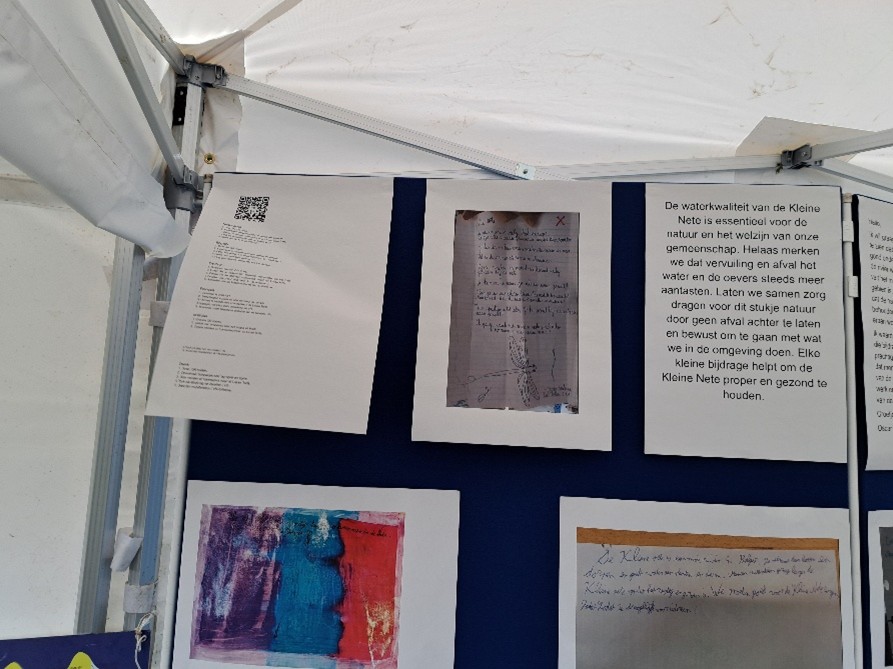
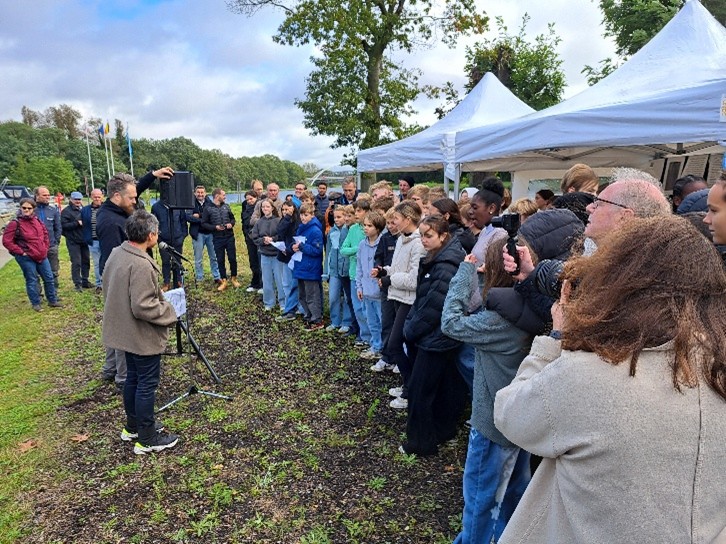
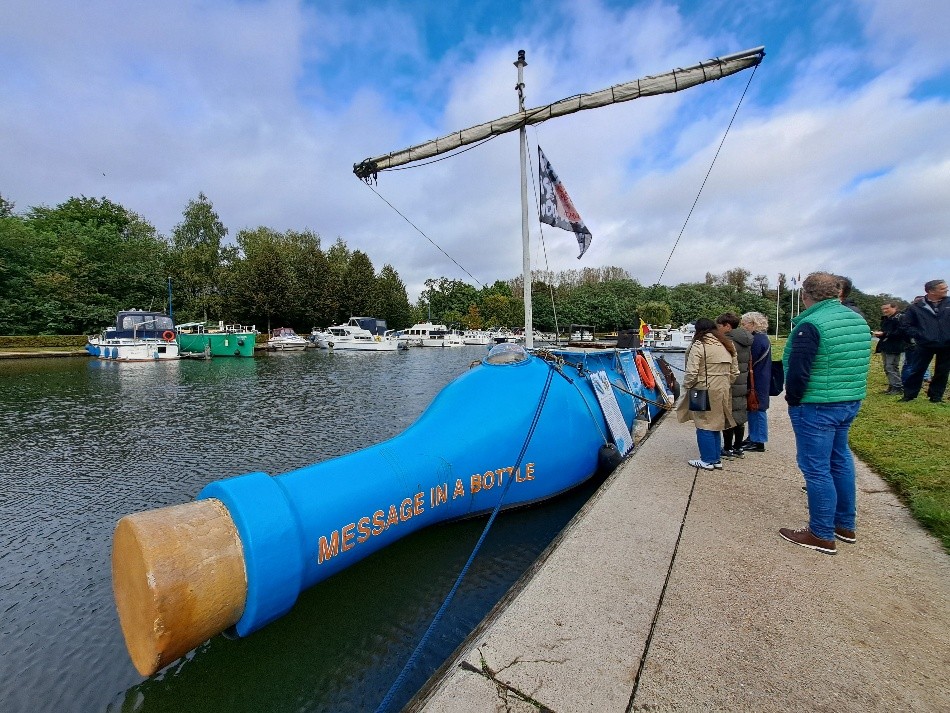
One of the key components was “Message in a Bottle”, developed in collaboration with the organisation Stormkop. This educational participation activity engaged both local communities and future users of the Kleine Nete River. Stormkop worked with schools in the region to collect the dreams, concerns and ideas of young people regarding the future of the river. These messages, symbolically representing the voice of the next generation, were placed in bottles and ceremonially presented to the Governor of the Province of Antwerp. This gesture emphasised the importance of long-term stewardship and intergenerational responsibility for healthy waterways.
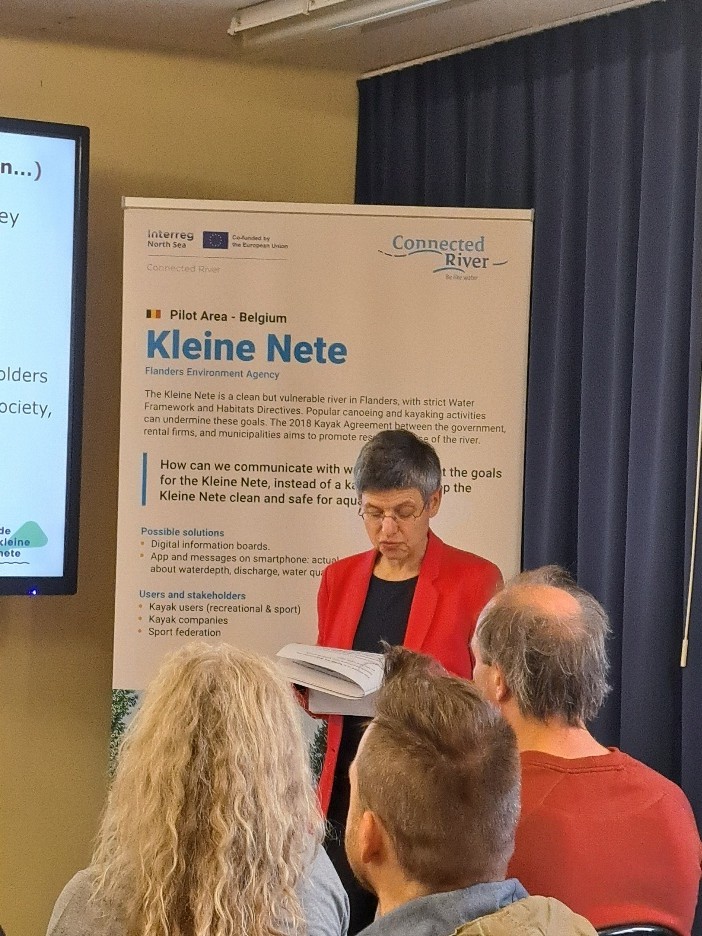
In parallel, the project partnered with the Antwerp Management School to organise innovation workshops with all stakeholder groups. These workshops aim to identify individual and shared needs, map common goals and explore new opportunities for cooperation. The intention is to build a collaborative ecosystem in which stakeholders co-design solutions related to ecological quality, recreational use, communication, governance and water safety.
The monitoring component of the pilot will be reinforced through the installation of tracking devices and the implementation of an e-ticketing system along the Kleine Nete. Once operational, these devices will provide insights into user behaviour, flows and pressures on the river. This data will support evidence-based decision-making and help evaluate the impact of interventions.
Together, these elements form a holistic engagement and innovation approach. By combining creative participation, scientific monitoring and structured co-creation, the project demonstrates how multi-stakeholder collaboration can drive sustainable river management. The high level of enthusiasm expressed by partners highlights the success of the approach and the strong foundation it provides for the next stages of the pilot.
Additional Information:
Kleine Nete Antwerpen Connected River | Interreg North Sea
Connected River creates more accessible waterways
In images