Challenge(s)
How can authorities redesign their strategies to effectively influence skipper behaviour and improve shared waterway safety?
Good practice
Developing an effective method to influence recreational skippers to make the right decision without impacting the joy of sailing
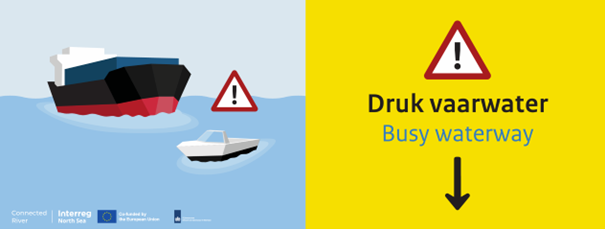
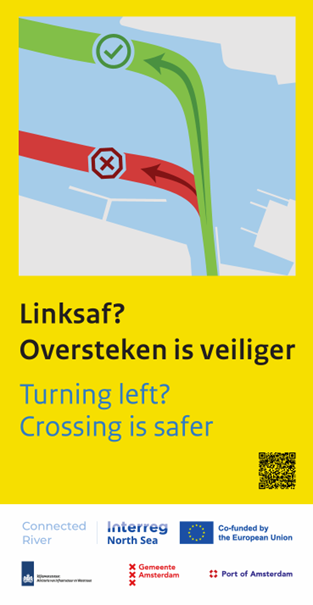
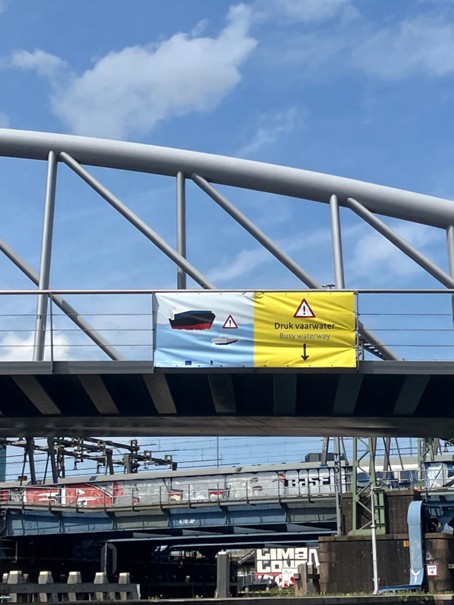
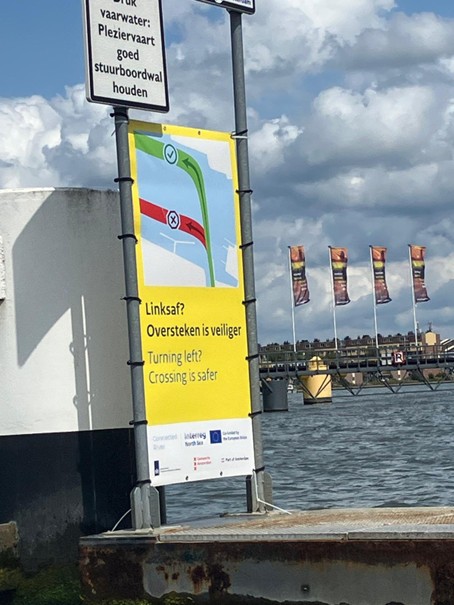
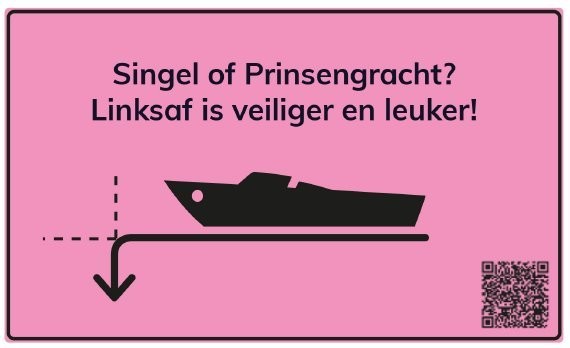
Recreational skippers do not always follow the safe and official routes. Instead, they take unlawful and unsafe shortcuts. This shows that skippers are not influenced by conventional communication ways. To influence recreational skippers who either do not know or at least do not follow the maritime rules, Rijkswaterstaat, in the framework of the Connected River project, experimented with unconventional methods to influence the skipper’s behaviour. These methods include hanging seasonal banners with clear visuals proven to be most effective.
This good practice also includes objective 2.1 (Promoting dialogue and cooperation between socio-economic stakeholders to identify potential synergies and encourage better management of natural resources) of the AIVP's Agenda 2030.
Case study
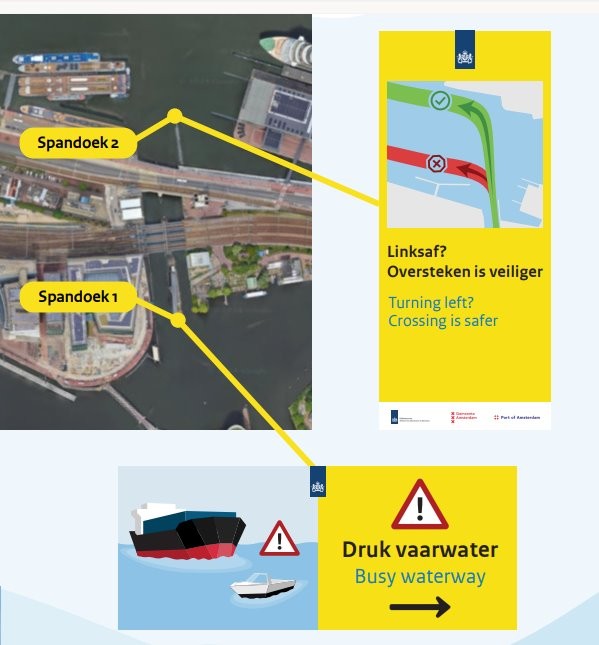
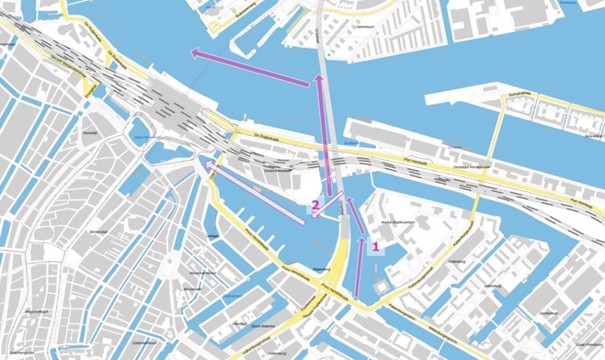
The Connected River project is a EU-funded project that aims to boost the capacities of multi-stakeholder ecosystems to deliver services that guarantee the safety, accessibility, and livability of waterways & waterfronts in the North Sea Region. One of the experimentations of the project takes place on the river IJ. The main problem is that recreational skippers travelling on the IJ, often do not take the official route, creating a hazardous environment. To address this issue, Rijkswaterstaat installed seasonal banners with clear visuals to attract attention and change this behaviour. The banners are a low-cost way to nudge hard-to-reach recreational skippers to take the right route. By placing them just before a decision point on the water, they have the most impact.
Experience has shown that recreational skippers tend to fall into two groups: those who are well-prepared and know how to behave on the water, and those who are less familiar with the rules. A first attempt to reach this second group was through an app. Although it was received enthusiastically by several participants, skippers were reluctant to download yet another app.
Research showed that most people preferred visual communication: clear signs and suggestions for a pleasant, safe route, rather than audio messages explaining navigation rules.
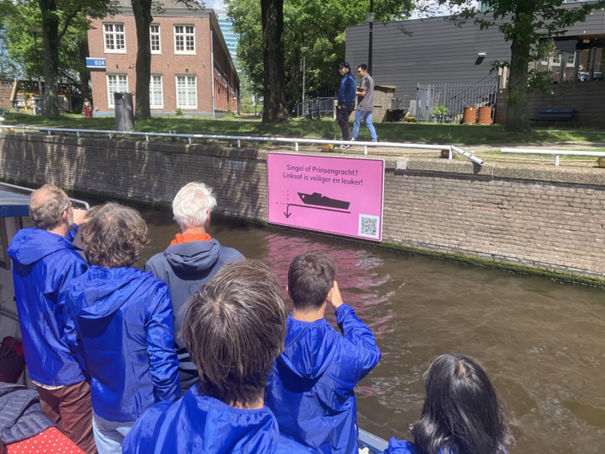
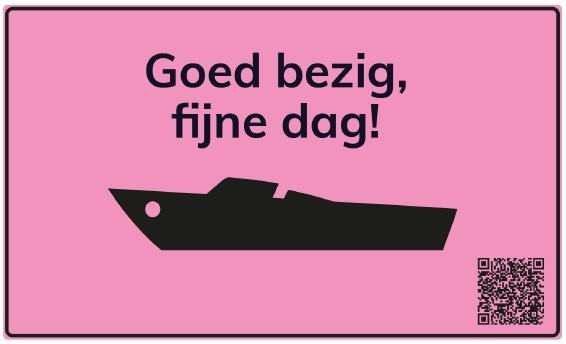
So, the next step was to create nudging signs: colourful, pink signs with positive messages, inspired by signs the municipality used to encourage cyclists to take a detour. However, installing signs in a busy area with many different public authorities proved challenging. It was difficult to get permission to hang them. After another round of feedback, it became clear that, since Amsterdam is such an international city, people preferred signs in both Dutch and English.
In the final stage, banners were designed and hung to nudge skippers in the right direction. A key part of this process was involving end-users early on, by asking them what they found clearest in terms of text and visuals before printing and hanging the banners. Conversations with people around the IJ also revealed that many skippers taking the shortcut believed it was actually the safer route, rather than following the official one.
To summarise, both the signs and banners with a positive tone effectively nudged recreational skippers to choose the safer route. Data analysis shows a reduction of nearly 50% in the number of people choosing the unsafe option when using banners. Essential in the process of making effective banners is to talk to the end-user about why they perform certain actions, and also what they think is the clearest way of communicating.
Additional Information:
Connected River Connected River | Interreg North Sea
Video of the Pilot Area “Amsterdam IJ” Connected River | Interreg North Sea
Experiment Marineterrein – Positive Nudging Connected River | Interreg North Sea
Nieuw evenwicht op het water – Rijkswaterstaat innoveert
In images