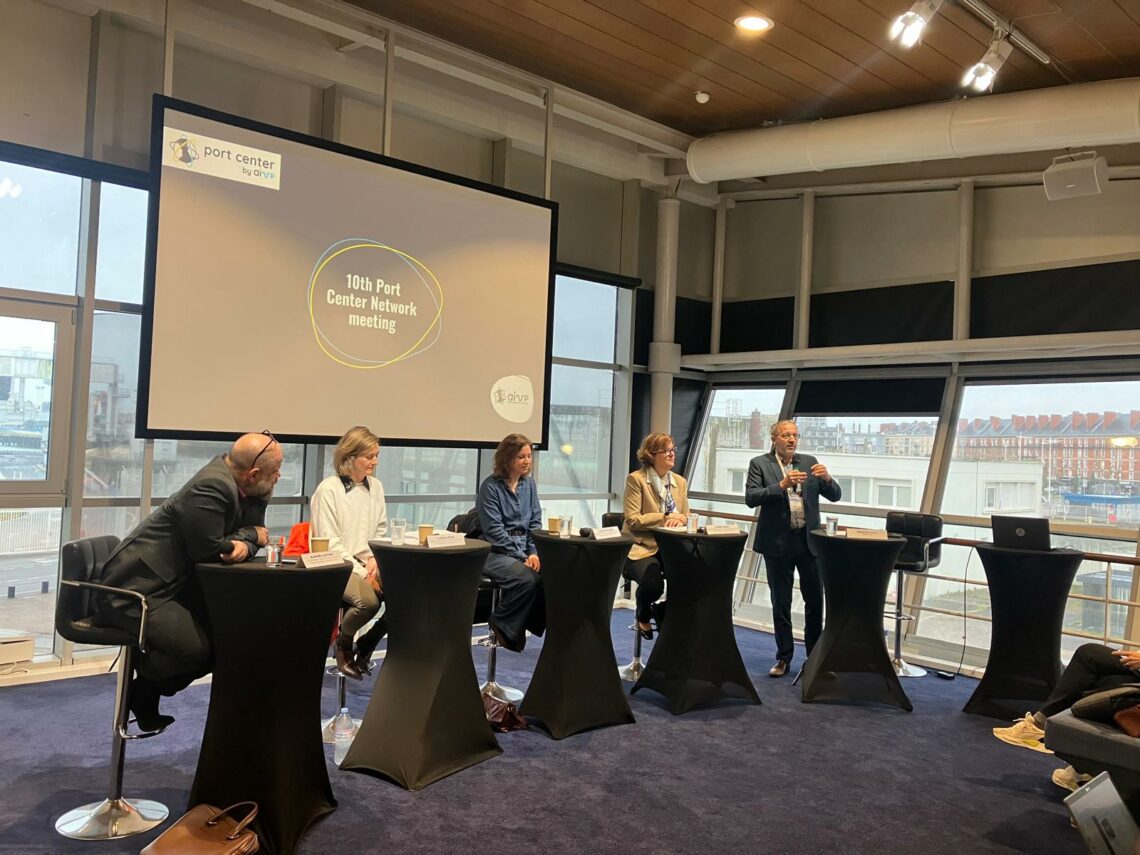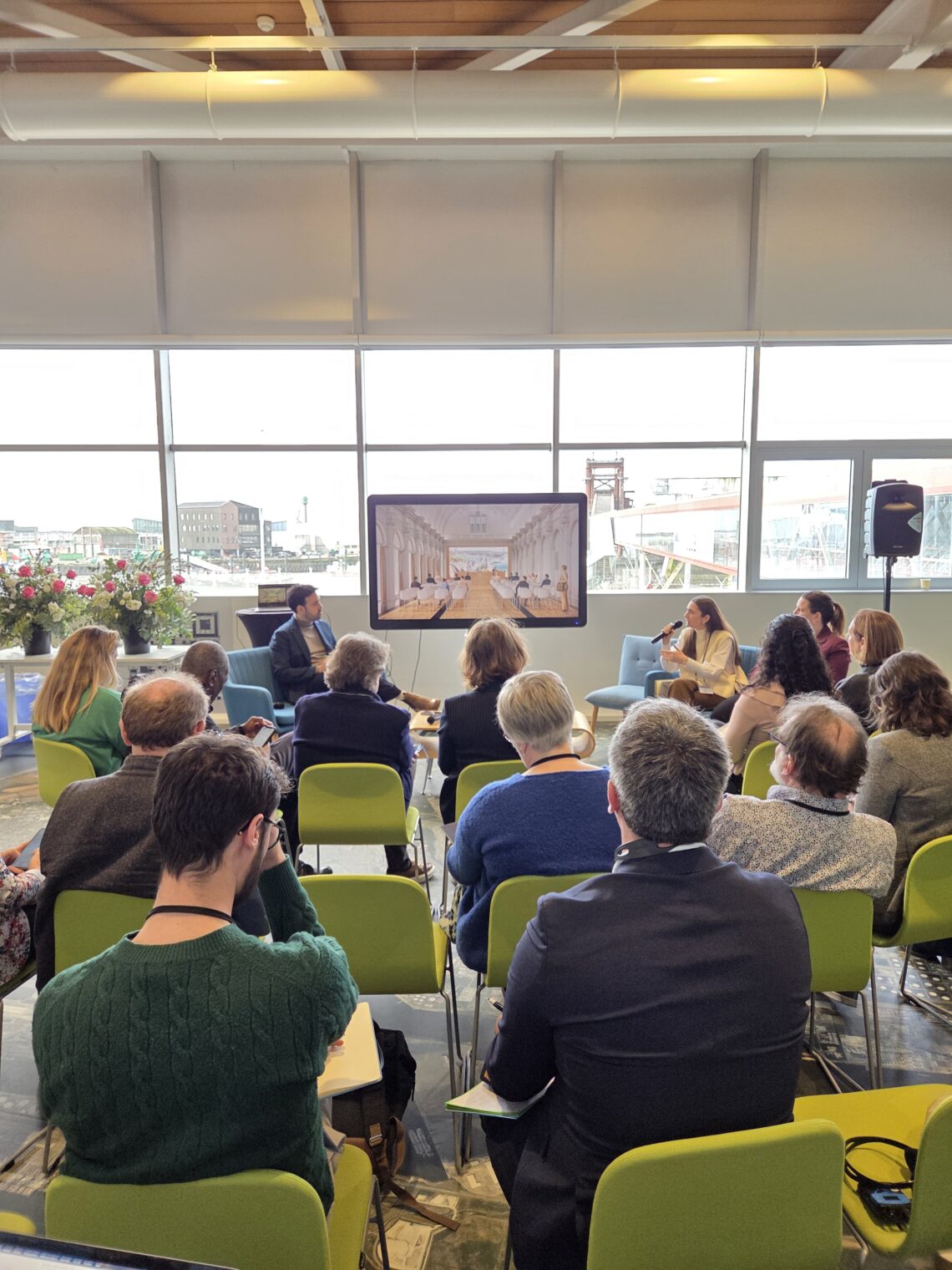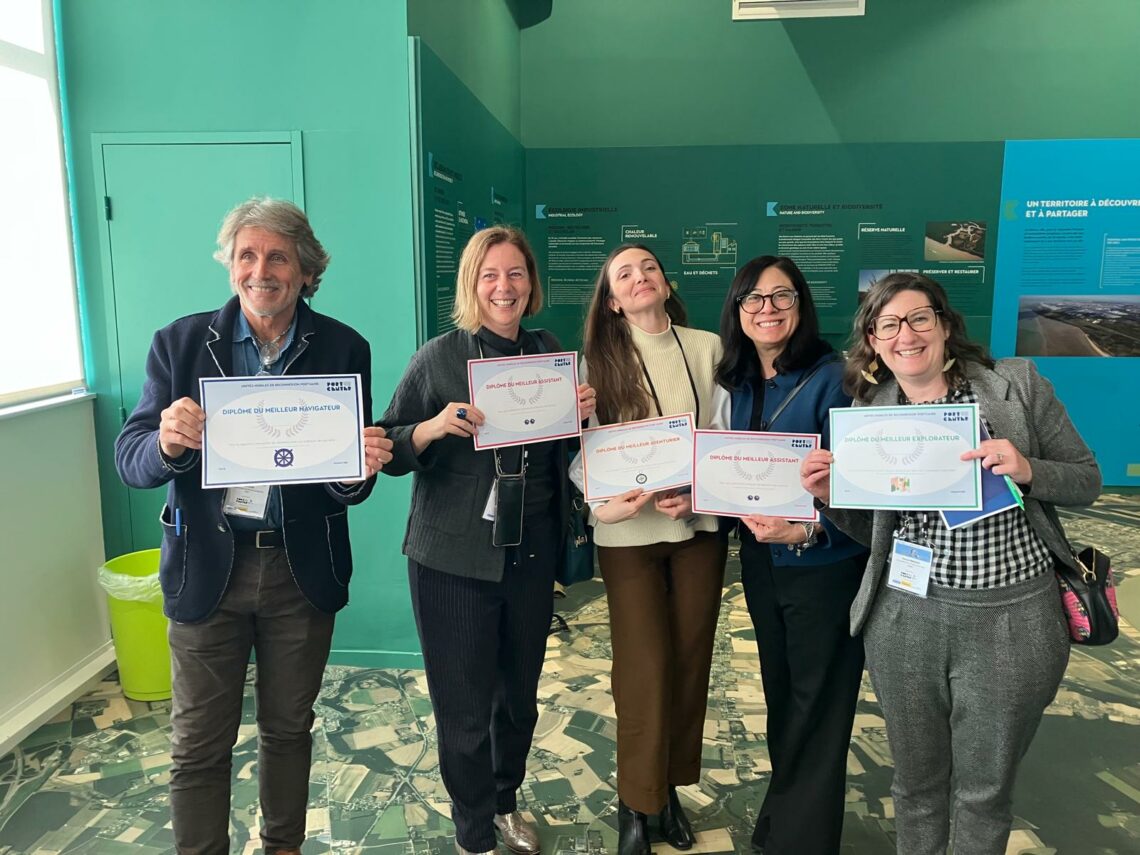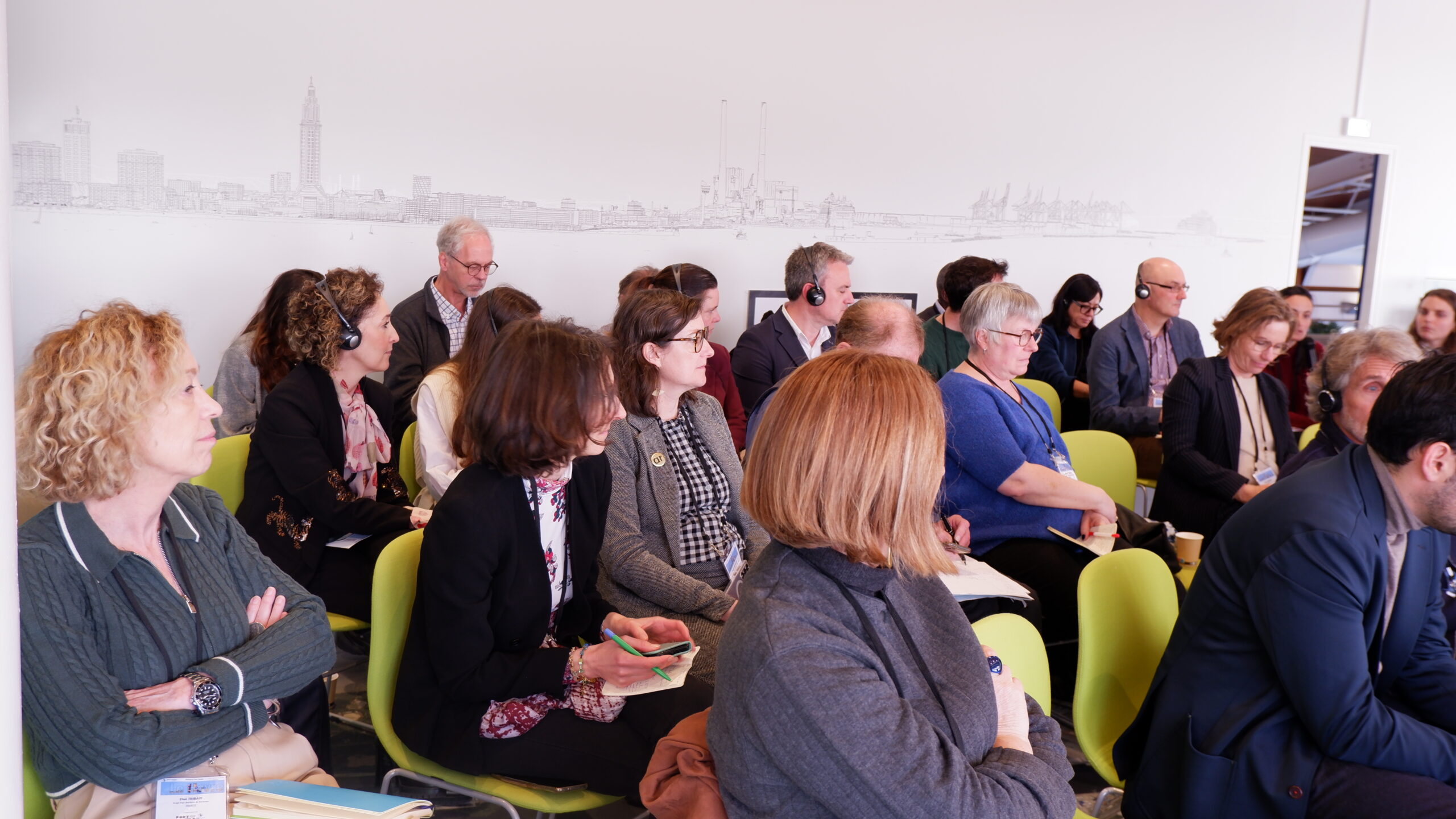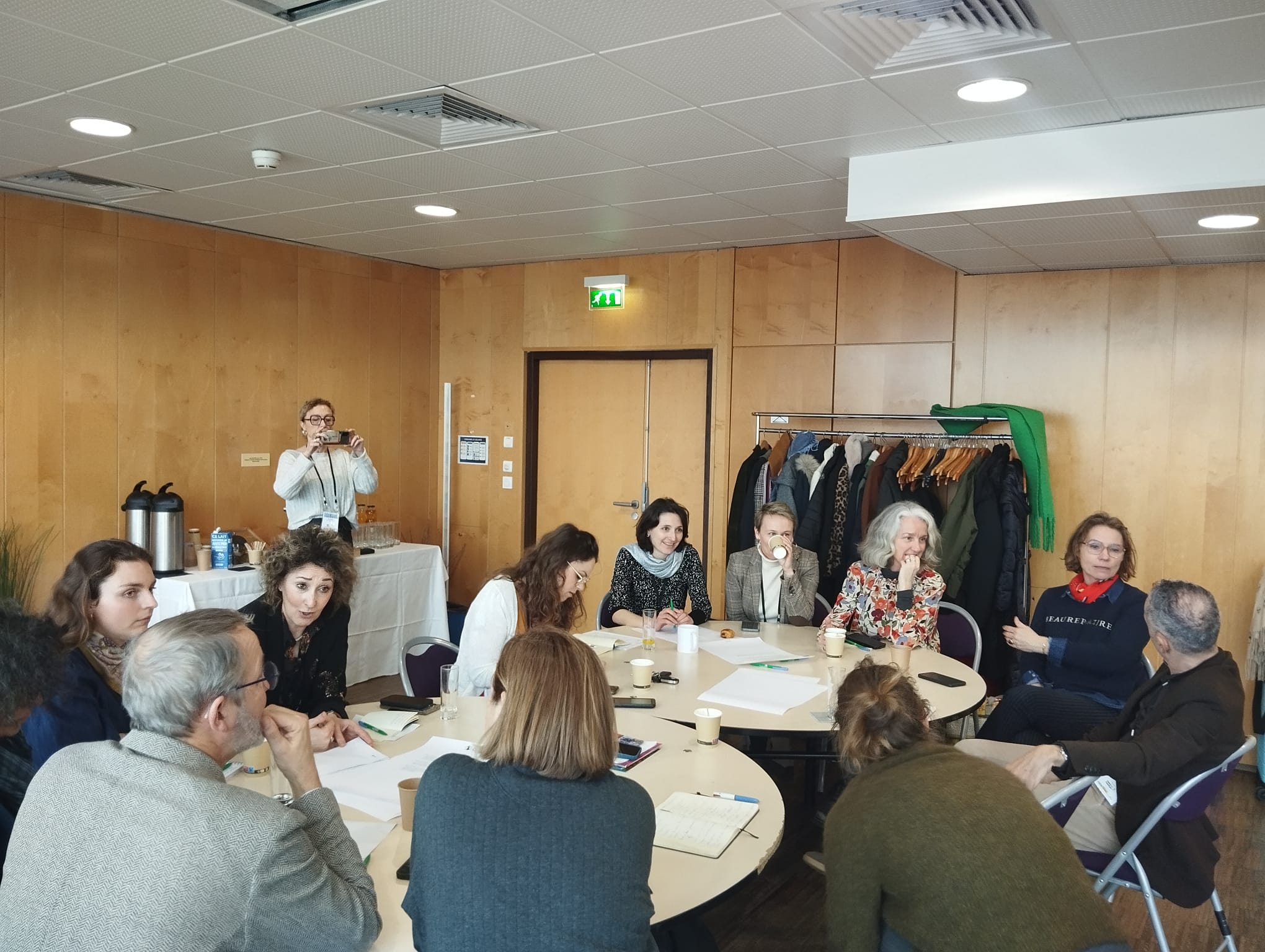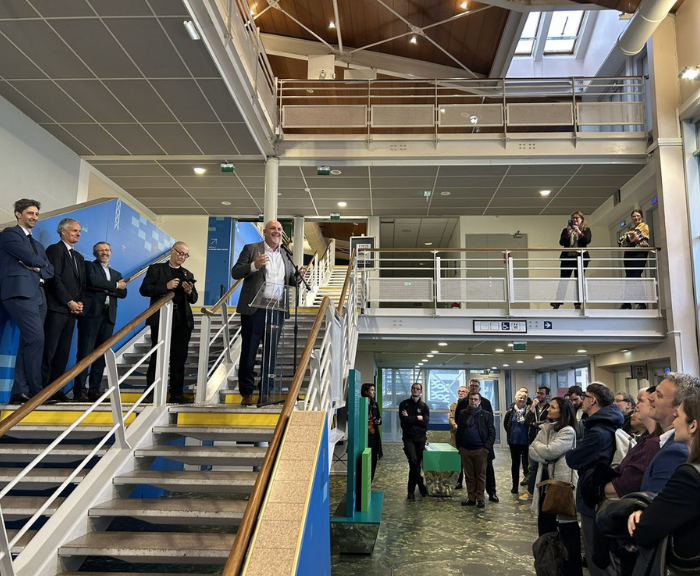
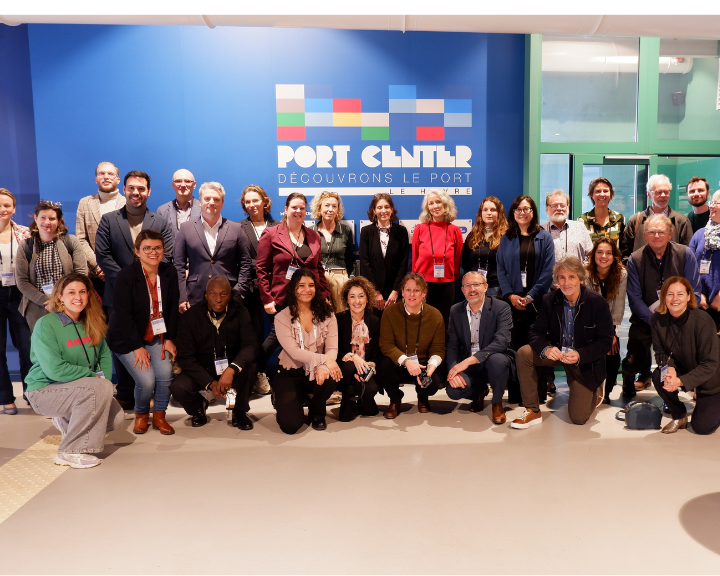
The 10th edition of the Port Center Meeting took place at the Le Havre Port Center, bringing together a wide range of stakeholders involved in city-port mediation. Numerous international ports were represented, including Bordeaux, Marseille, Antwerp, Barcelona, Nantes, Strasbourg, San Diego, Dublin, Dunkirk, Livorno, Bilbao, Brest, La Rochelle, Haiti, HAROPA PORT, as well as various associated organizations.
Among these were HAROPA PORT, AURH, Brest Métropole, the École supérieure d’art et design, the Maison pour la science en Alsace, Aggelos, the Lorient metropolitan area, the Development Council of the Eurométropole de Strasbourg, as well as AIVP, Le Havre Port Center, and the CCI Seine Estuaire.
This meeting marked a significant analytical milestone: it clarified the network’s needs at each stage of maturity while laying the foundation for collective reflection on governance models, economic balances, and renewal strategies.
Four Port Center Profiles: A Strategic Overview of the Network
The discussions identified four main situations, each associated with specific challenges:
– Recently opened Port Centers (Port of Bordeaux, Port of Marseille): These centers need to stabilize their model: moving from temporary to sustainable, defining clear governance, securing resources, and structuring educational and institutional partnerships. Their main challenge is transforming a successful launch into long-term viability.
– Developing Port Centers (Port of Antwerp, Port of Barcelona, Port of Nantes, Port of Strasbourg): These ports are advancing in the construction of their Port Center project. They need to clarify local objectives, consolidate existing initiatives, and identify political, financial, and partnership levers to anchor themselves sustainably in their territories.
– Ports in planning (Port of San Diego, Port of Dublin, Port of Haiti, Port and Metropolitan Area of Brest): Here, the dynamic is emerging. Initial meetings, diagnostics, and workshops must be transformed into a structured approach with a clear vision of the Port Center’s future role in city-port relations.
– Operational Port Centers (Port Center of Dunkirk, Port Center of Livorno, Port Center of Bilbao, Port Center of La Rochelle, Lorient metropolitan area, Port Center of Le Havre): These centers are rethinking their content, strategies, spaces, and sometimes even their governance. Their challenge is to reinvent themselves while remaining attractive and aligned with the needs of their local area.
The New Port Center Charter: A Reference Framework for a Diverse Network
The presentation of the new Port Center Charter by AIVP was a key milestone. It addresses the following major needs:
– Harmonizing practices within a network where structures vary greatly in size, status, and economic model.
– Clarifying commitments: shared governance, public access, pedagogy, transparency, and local cooperation.
For established Port Centers, the Charter becomes a tool for strategic repositioning. For ports in planning, it serves as a compass to structure their approach from the outset.
Three Critical Challenges Identified: Governance, Economic Model, Management
Discussions highlighted three recurring challenges, regardless of the development stage:
– Governance: The coordination between the port, city, economic actors, and cultural and educational institutions must be anticipated. The strongest centers are those where governance is conceived as a dynamic balance rather than a mere administrative framework.
– Economic Model: No Port Center relies on a single source of funding. Viability requires a mix of resources: port contributions, partnerships, sponsorship, ticketing, European funding, etc.
– Operational Management: Programming, mediation, maintenance, reception, partnerships: day-to-day management is not merely a technical task but a strategic lever. Without robust management, even well-designed projects struggle to endure.
An External Perspective: Contribution of the Port Center of Dunkirk and the Charlemont Model
The “external perspective” session was led by the Port Center of Dunkirk, whose new management brings experience from Charlemont, a cultural organization recognized for its ability to:
– Diversify formats,
– Enhance attractiveness,
– Stabilize its economic model.
This contribution broadened the network’s perspective: Port Centers are not isolated entities but part of a larger cultural ecosystem, where mediation, attractiveness, and sustainability challenges are shared.
A Collaborative Workshop to Set Network Priorities
The third day, held at CCI Seine Estuaire, enabled collective work on network priorities.
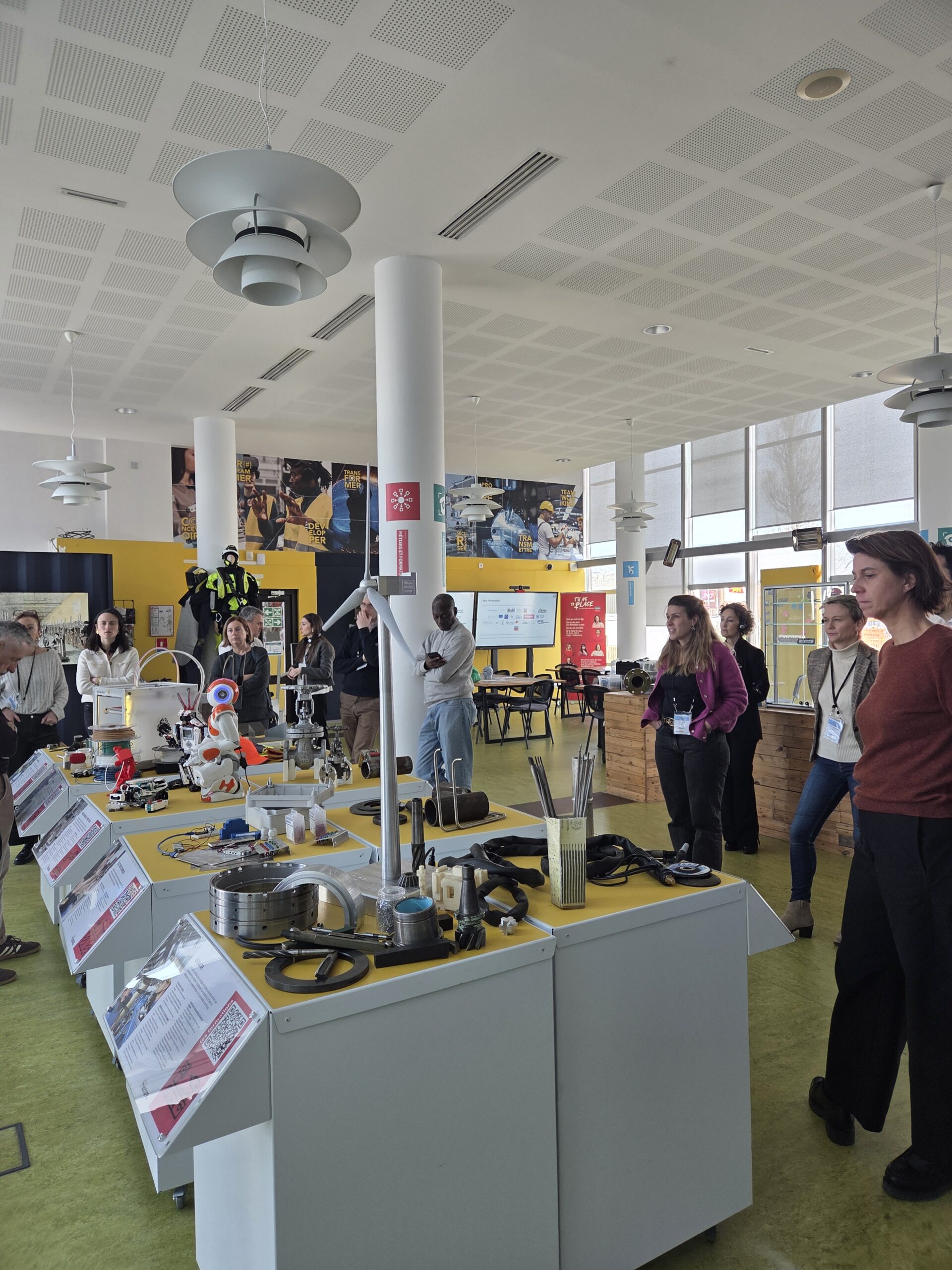
The visit to the Espace Champion de l’Industrie complemented this morning of exchanges, illustrating how an economic actor can make industry accessible to a broad audience, directly reflecting the ambitions of Port Centers.
Le Havre as a Testing Ground
Two highlights anchored this edition in the Le Havre context:
– The inauguration of the MAGPIE exhibition at the Le Havre Port Center, focused on port and logistics transitions;
– A preview visit of the new Le Havre cruise terminal, opening in 2026, representing a new step in city-port relations.
These experiences demonstrate how a Port Center can use cultural facilities and major infrastructure as tools for mediation.