Transports et manutention Deschieter is a multimodal logistics provider specialising in river and rail solutions, based in the heart of the port of Ghlin, Belgium. It is part of TMF Operating, a Franco-Belgian group wholly owned by a family. The company actively contributes to the development of more efficient and sustainable transport flows on an international scale. It is joining the AIVP network in 2026.
Interview with Arnaud de Chirée, CEO.
AIVP – Could you briefly introduce your organisation to the members of our international network?
Arnaud de Chirée – TMF Operating is a specialist in logistics and multimodal transport, established across various regions, with a firm conviction: industrial performance and the green transition require a profound transformation of supply chains. The group now has over 280 employees and generates a turnover of €110 million. Through our seven hubs in France and Belgium, we design and operate solutions combining river, rail and road transport to secure, optimise and decarbonise our industrial clients’ logistics flows.
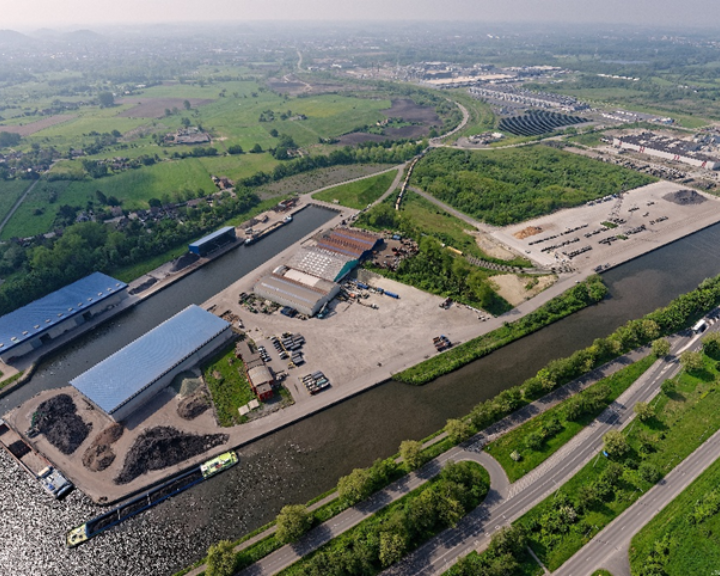
The company Transports et manutention Deschieter, based in Ghlin (Belgium), perfectly illustrates this approach. It offers a comprehensive range of handling, storage, order preparation and transport services to shippers, with a direct connection to river and rail infrastructure that enables it to implement modal shift. Our role is to act as a logistics solutions integrator, capable of transforming the complexity of logistics flows into a competitive advantage for our clients, whilst contributing to the industrial development of regions and to sustainable development.
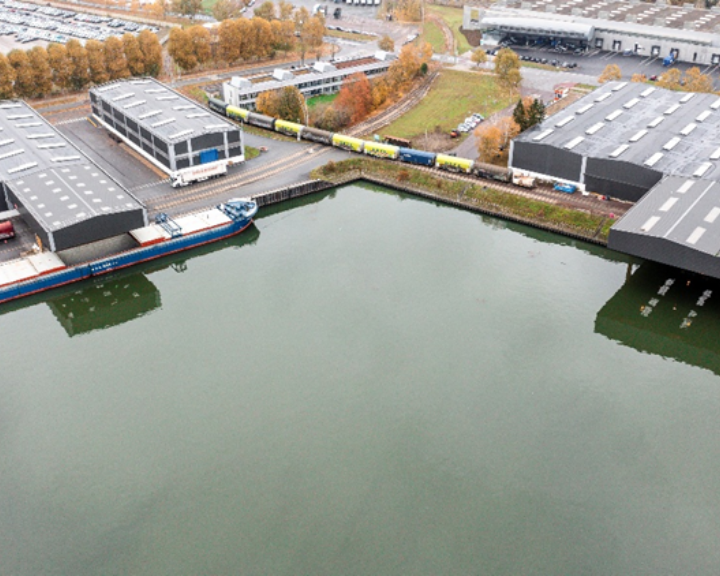
©Transports et manutention Deschieter
AIVP – What do you expect from the AIVP network?
Arnaud de Chirée – Port cities today are at the crossroads of economic, environmental and societal transitions. In this context, the AIVP network represents a unique opportunity to share visions, lessons learnt and innovations on an international scale. Ports are no longer just infrastructure: they are becoming multifaceted ecosystems where industry, logistics, urban planning and citizens’ expectations converge. We are convinced that it is through cooperation and sharing that we will be able to accelerate the transition towards more sustainable and integrated models
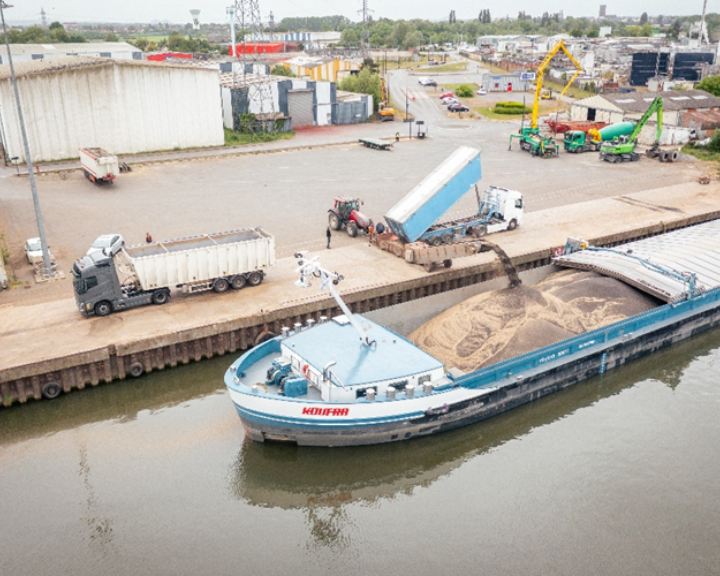
©Transports et manutention Deschieter
AIVP – You are based in Ghlin within the Port Autonome du Centre et de l’Ouest (Belgium); what is your development and growth strategy for this site at the crossroads of waterways between Belgium, the Netherlands and northern France?
The Ghlin site benefits from an exceptional strategic location at the heart of the Northern European logistics corridor. Our ambition is to turn it into a leading multimodal hub, capable of efficiently connecting flows between seaports, European industrial regions and end markets. In practical terms, this means:
- Supporting manufacturers in their localisation strategy,
- Facilitating the export of local production to international markets,
- Developing competitive logistics solutions based on modal shift.
We are approaching this development with a long-term perspective: structuring sustainable and diversified flows capable of making multimodal models economically sound and environmentally relevant.
©Transports et manutention Deschieter
AIVP – In the river transport sector, there is currently talk of intensifying multimodality and ensuring ‘just-in-time’ delivery. What are your plans regarding these issues? And what positive effects might they have on the local area and its residents?
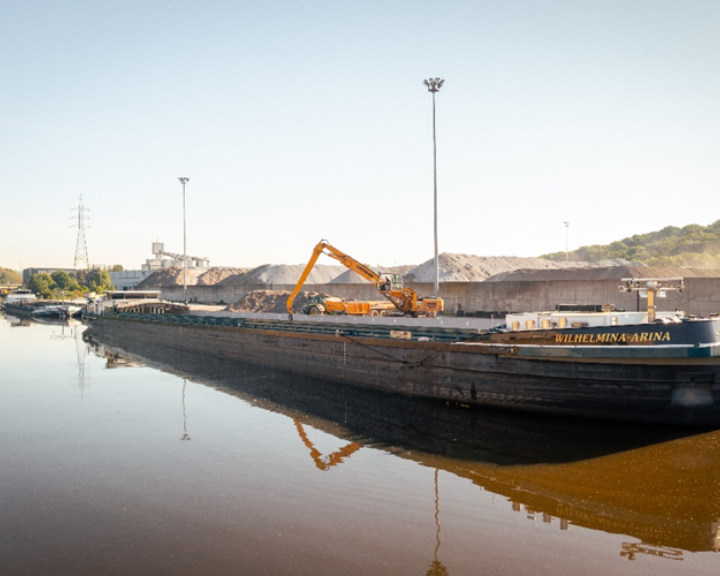
Multimodality is at the heart of our development model. It provides a concrete response to current supply chain challenges by activating several levers, such as the decarbonisation of transport, the flexibility of transport modes, and the economic efficiency made possible by economies of scale. The complementary nature of river, rail and road transport enables the creation of robust supply chains capable of absorbing unforeseen events whilst remaining competitive.
Furthermore, inland waterway transport emits up to five times less CO₂ than road transport using internal combustion engines, and rail transport up to nine times less. The modal shift is therefore strategic for sustainable development. The benefits for regions and citizens are immediate: less road congestion, lower CO2 emissions, reduced noise and visual pollution, as well as more sustainable economic activities that are better rooted locally and support employment.
One might think that river and rail transport are incompatible with the just-in-time concept because they are slower than road transport. We have been working with Toyota and its suppliers for over 25 years on advanced industrial logistics operations. Just-in-time is standard practice in the automotive sector because it is a mature and highly optimised market where supplies are perfectly synchronised with production. Many other industrial sectors have adopted or are in the process of rolling out the just-in-time concept. The challenge is not so much to deliver quickly, but to deliver at the exact moment the factory needs the raw materials or semi-finished products, whilst optimising the resources deployed.
Shippers are increasingly opting to transport goods by river or rail from a seaport or the heart of Europe to an inland port close to their factories. In this way, they can decarbonise 90% of their supply chains without compromising the performance of their production facilities, as the immediate proximity allows for rapid delivery by lorry over the final few kilometres. At the same time, they are outsourcing stock that can sometimes put a strain on their cash flow and converting storage space within their facilities into production workshops. This is a complex process that requires support from a professional such as TMF Operating and its subsidiaries, as the design of the logistics flows involves a high degree of engineering.
Our ambition is to develop this port model, which acts as a hub, partnering with manufacturers seeking to ensure the long-term sustainability of their supplies and deliveries.
©Transports et manutention Deschieter